
About North East India
Northeast India is the eastern-most region of India connected to East India via a narrow corridor squeezed between Nepal and Bangladesh. It comprises the contiguous Seven Sister States (Arunachal Pradesh, Assam, Manipur, Meghalaya, Mizoram, Nagaland, and Tripura), plus the Himalayan state of Sikkim. These states are grouped under the MDONER ministry of the Government of India. Except for the Goalpara regionof Assam, the rest were late entrants to the British India, the Brahmaputra valley area of Assam became a part of British India in 1824, and the hill regions were incorporated even later. Sikkim joined the Indian union through a referendum in 1975 and was recognised as part of Northeast India in the 1990s.
In terms of geographical size, Northeast India constitute about 8% of the total India's size, and is roughly 3/4th the size of the state of Maharashtra. Northeast India's population (all 8 states combined) is approximately 40 million (2011 census), which represents 3.1% of the total Indian population (1,210 million). Northeast India's population size is roughly equal to the state ofOdisha.
The Siliguri Corridorin West Bengal, with a width of 21 to 40 kilometres (13 to 25 mi) connects the North Eastern region with the main part of India. The region shares more than 4,500 kilometres (2,800 mil) of international border (about 90 per cent of its entire border area) with China (South Tibet) in the north, Myanmar in the east ,Bangladesh in the southwest, and Bhutan to the northwest.
The states are officially recognised under the North Eastern Council (NEC) constituted in 1971 as the acting agency for the development of the eight states. The North Eastern Development Finance Corporation Ltd (NEDFi) was incorporated on 9 August 1995 and the Ministry of Development of North Eastern Region (DoNER) was set up in September 2001.
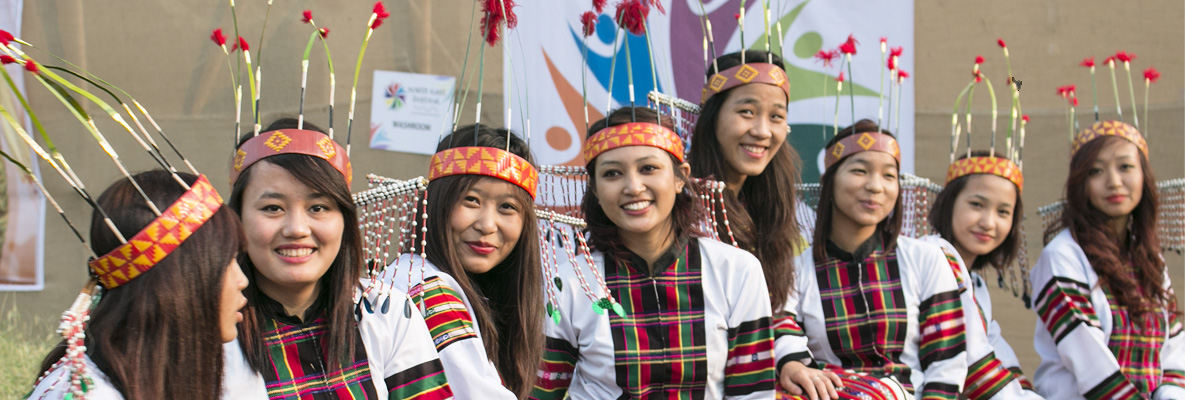
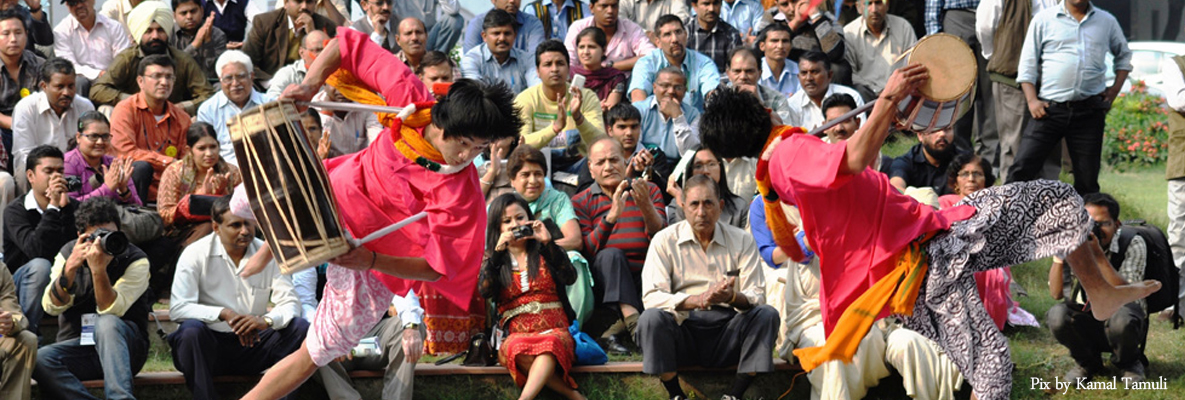
The region is known for its exotic and colourful culture, its healthy and organic lifestyle and smiling faces. A tribal heartland, the region is connected to the rest of the country by narrow strip of 26 km long Siliguri Corridor land and 98% of its area is bordering our international neighbors. The multi ethnic society of the region may be attributed to settlers from different backgrounds, be it Austro Asiatic, followed by Tibeto-Burmese and then by Indo Aryans. Home to more than 220 spoken languages in the country, this region has a rich legacy of tribal ethos and social multiplicity.
Geographically, the region is categorized into the Eastern Himalayas, Patkai-Naga-Lushai Hills, and the Brahmaputra, Imphal and Barak Valley Plains. The region is known for its rich bio diversity in its rain forests that are considered to be among the last few in the South Asian region. The world famous national parks are home to many endangered species & vegetation.
The economy is mostly agrarian and under developed with huge scope of improvement and growth. Today more than 40 million people reside in this region with more than 160 scheduled tribes and over 400 other sub tribal communities. There is a need to communicate with the world that the people from this region are one of the most literate, despite economic backwardness, and that, apart from its huge natural resources, the human resource can actually become the driving force for the transformation of the region and ushering economic growth.
Tourist attractions in the North Eastern states
Nagaland Mizoram